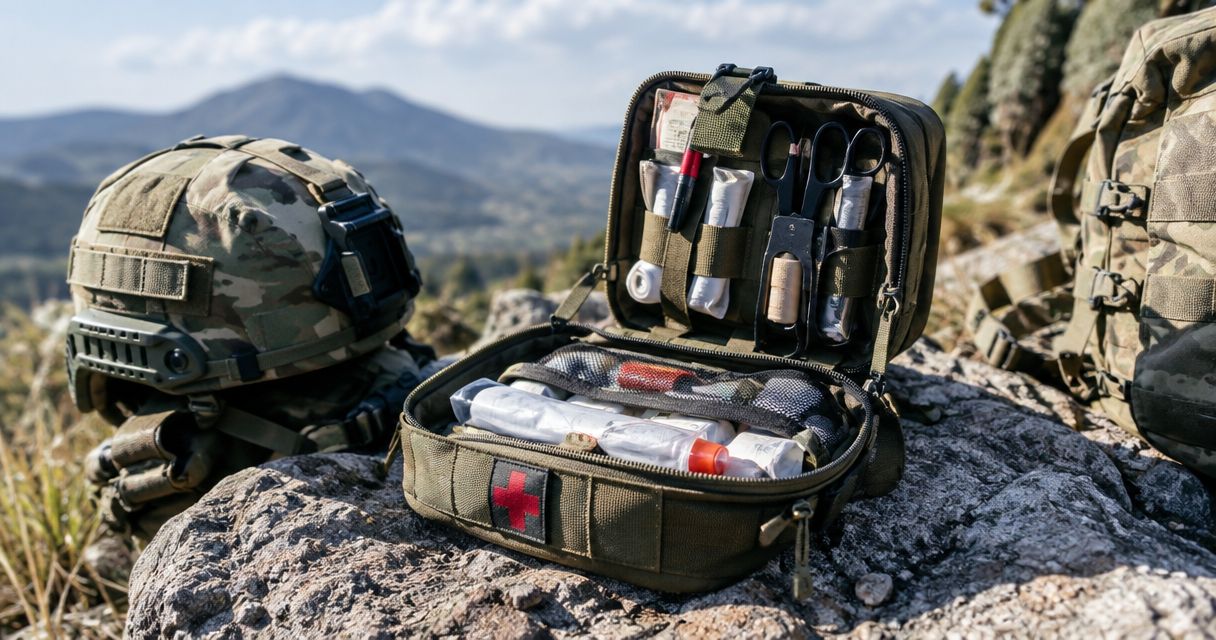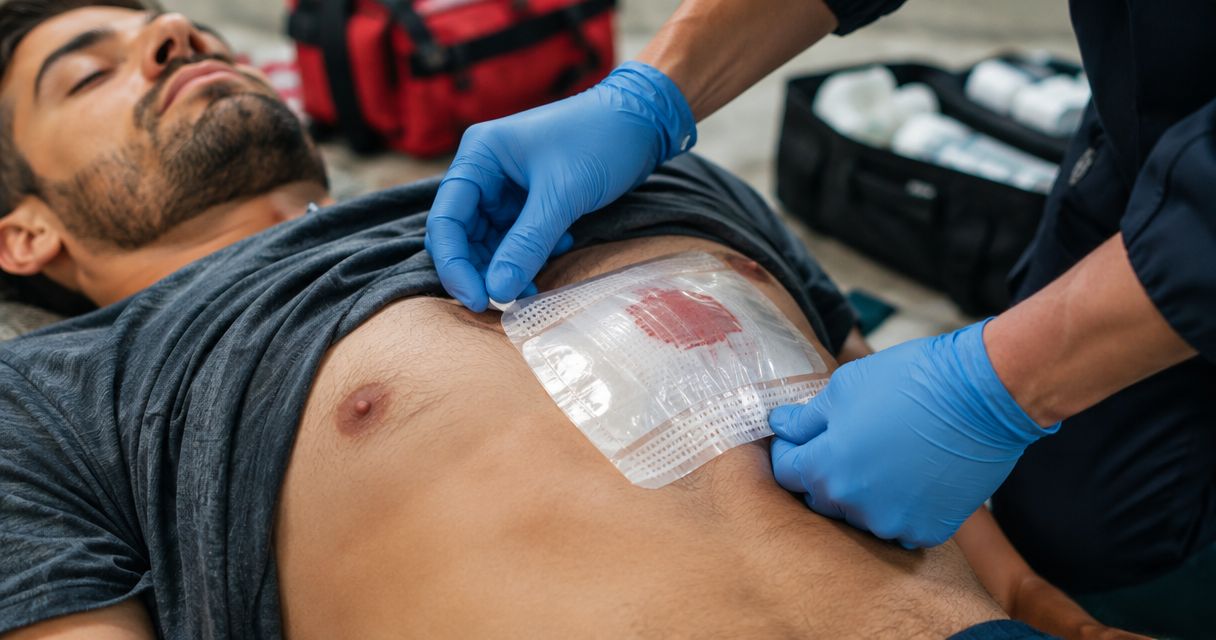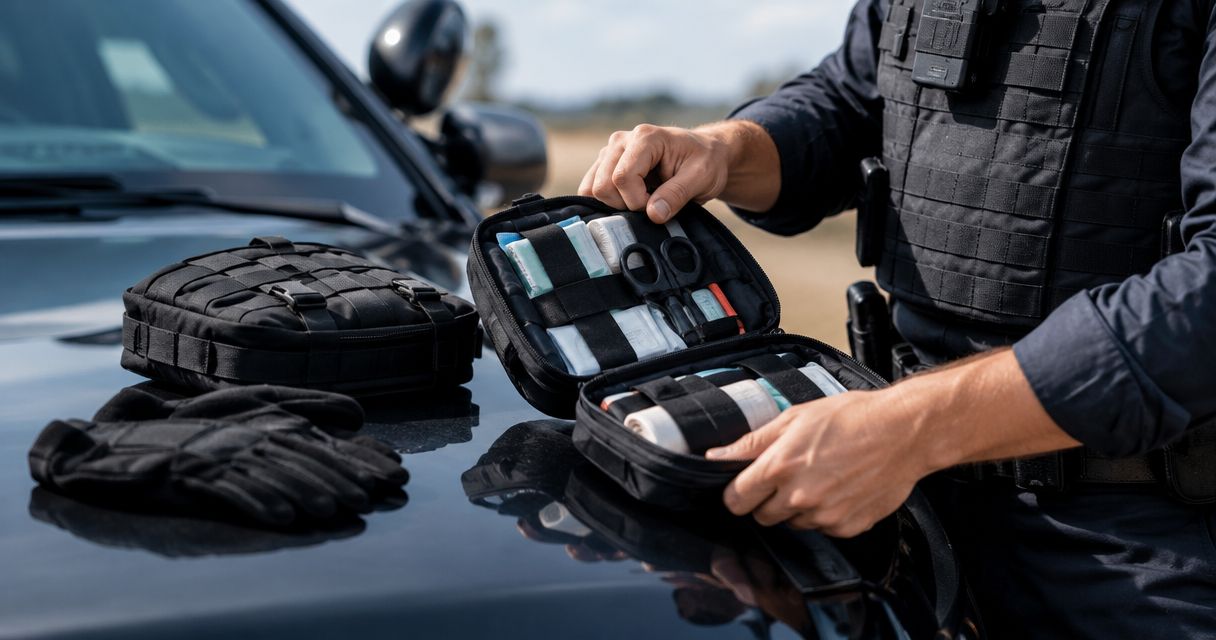
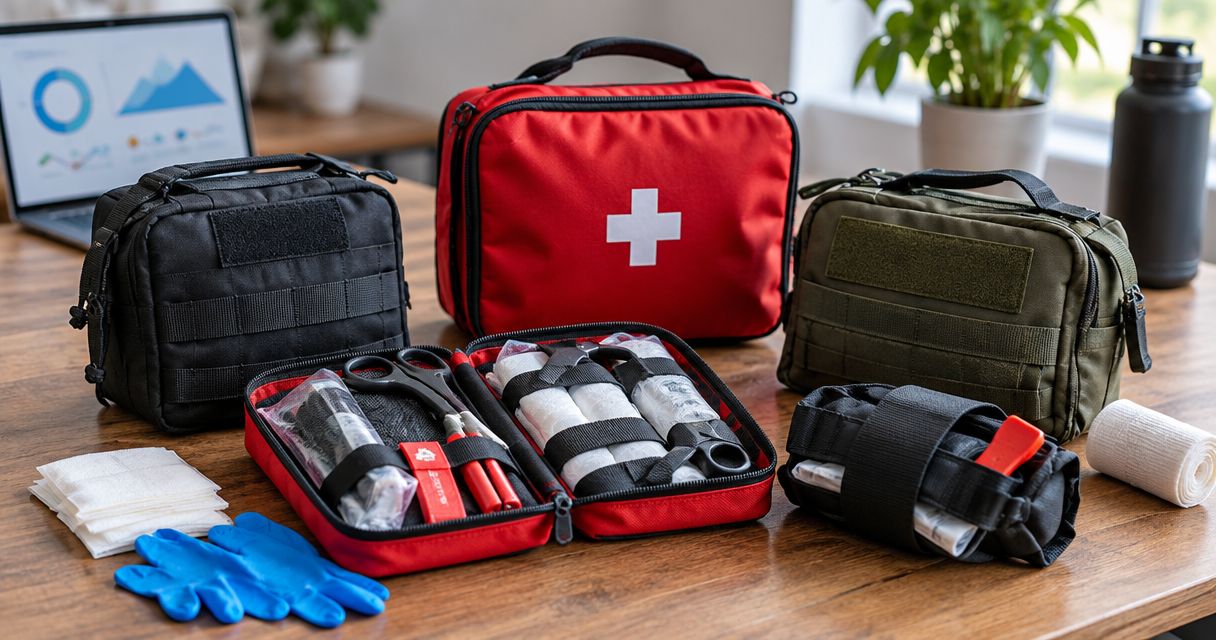
Trauma kits range from a slim individual first aid kit clipped to a duty belt to a full mass-casualty response bag stocked for a school or event venue, and picking the wrong category is what turns a kit into dead weight during an actual bleeding emergency.
- The best trauma kit for duty carry is a slim IFAK built around a tourniquet and hemostatic gauze.
- Civilian everyday carry kits trade component count for a size that fits a glove box or bag.
- Mass-casualty kits stock multiple tourniquets and dressings for bystander use, not one responder.
- TCCC-aligned components (tourniquet, hemostatic gauze, chest seal, airway) separate a real trauma kit from a first-aid box.
- North American Rescue builds trauma kits across military, law enforcement, EMS, and preparedness categories.
Why this matters
Hemorrhage control is the single skill that matters most in the first minutes after a penetrating injury, and it's the reason tactical medicine built a whole category around it separate from general first aid. A box of bandages and burn cream does nothing for a femoral bleed. In 2026, the trauma kit market has split into distinct categories built for different carriers, casualty loads, and skill levels, and the best trauma kit for a patrol officer is not the same as the best one for a parent's glove box.
The kits in this guide are organized by role and use case, not by a single leaderboard, because a mass-casualty kit and a duty-belt IFAK are solving different problems. North American Rescue builds across most of these categories, and the criteria below apply whether you're comparing its lineup or anyone else's.
What makes the best trauma kit
- Hemorrhage control first — a tourniquet and hemostatic gauze as the base, never an afterthought
- Airway and chest seal coverage for penetrating chest and airway trauma
- Carry method matched to the user — duty belt, MOLLE plate carrier, glove box, or backpack
- Component count matched to casualty load — one patient versus a multi-casualty scene
- Alignment with Tactical Combat Casualty Care (TCCC) or Stop the Bleed guidance
- Training level required to actually use what's inside correctly under stress
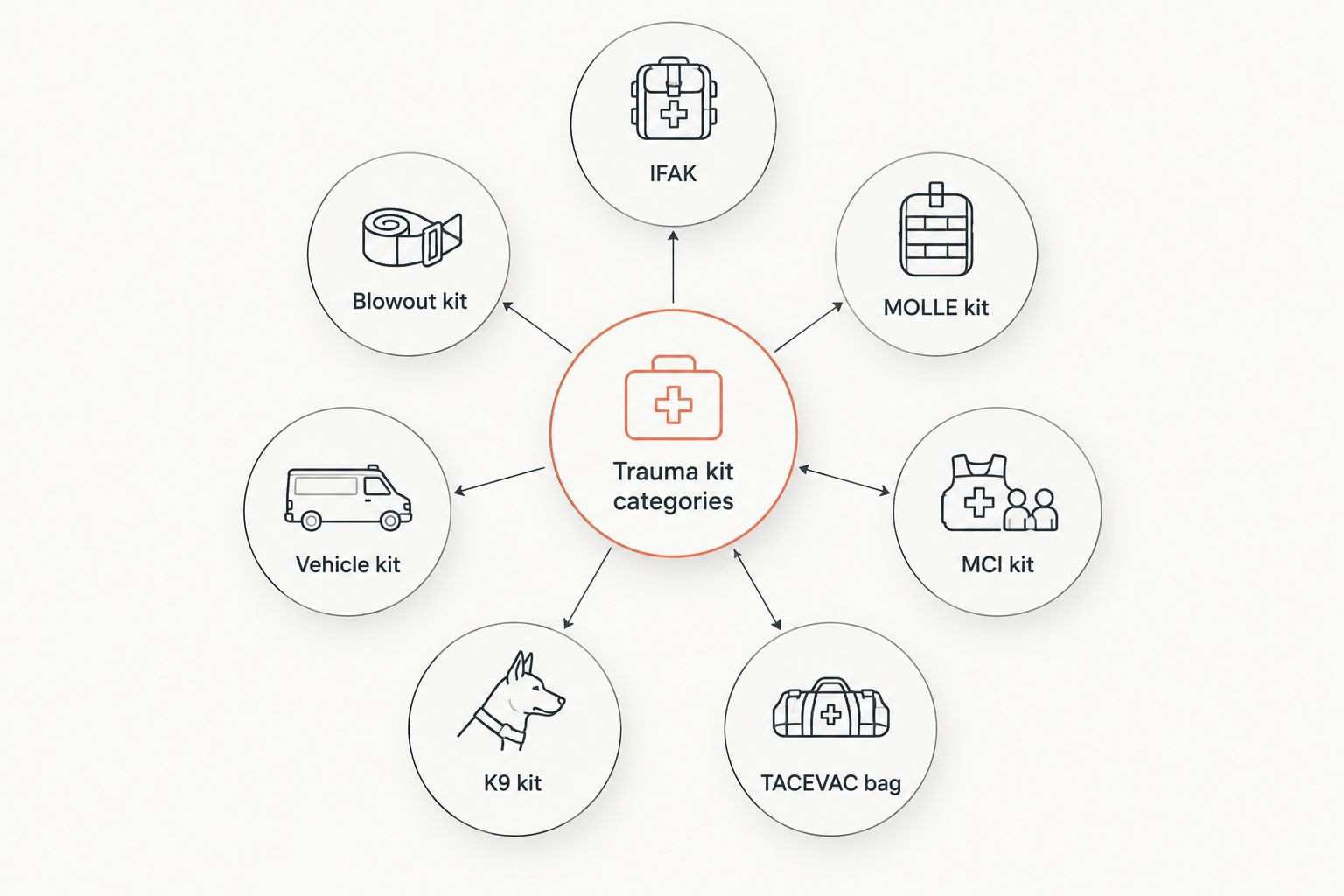
Best overall trauma kit in 2026: the IFAK (individual first aid kit) built for belt or plate-carrier mounting. Best for civilian everyday carry: a compact vehicle or bag-based trauma kit. Best for mass-casualty response: a public-access kit stocked with multiple tourniquets and dressings for bystander use.
Trauma kits at a glance
| Category | Best for | Standout feature | Key limitation |
|---|---|---|---|
| IFAK | Personal duty carry | Compact, single-patient hemorrhage kit | Enough supplies for one casualty only |
| Blowout/applicator kit | Rapid gunshot or blast response | Minimal footprint, fast to deploy | No airway or splinting supplies |
| MOLLE modular trauma kit | Tactical team loadouts | Modular pouches attach to a plate carrier | Bulkier than a slim IFAK |
| Vehicle/glove box kit | Civilian everyday carry | Fits a car console or daypack | Fewer components than a duty IFAK |
| Mass casualty (MCI) kit | Schools, venues, workplaces | Multiple tourniquets and dressings for bystanders | Not built for one responder to carry alone |
| K9 trauma kit | Tactical K9 handlers | Components sized for canine anatomy | Not usable on human casualties |
| TACEVAC / medic bag | Combat medics, tactical EMS | Full trauma and evacuation supply set | Heaviest, most involved category to stock |
1. IFAK: best trauma kit for personal duty carry
An Individual First Aid Kit is built around one core assumption: one carrier, one casualty, self-aid or buddy-aid. It's the standard for military and law enforcement duty belts because it fits a single pouch and stays out of the way until it's needed.
IFAK pros:
- Fast to reach and deploy under stress
- Mounts to a belt, vest, or plate carrier without adding bulk
- Standardizes what every team member carries
IFAK cons:
- Not enough supply for more than one patient
- Requires refresher training to use correctly under pressure
Best for: officers, soldiers, and armed professionals carrying for themselves. Verdict: Buy if your carry method is a belt or vest and you train with the components.
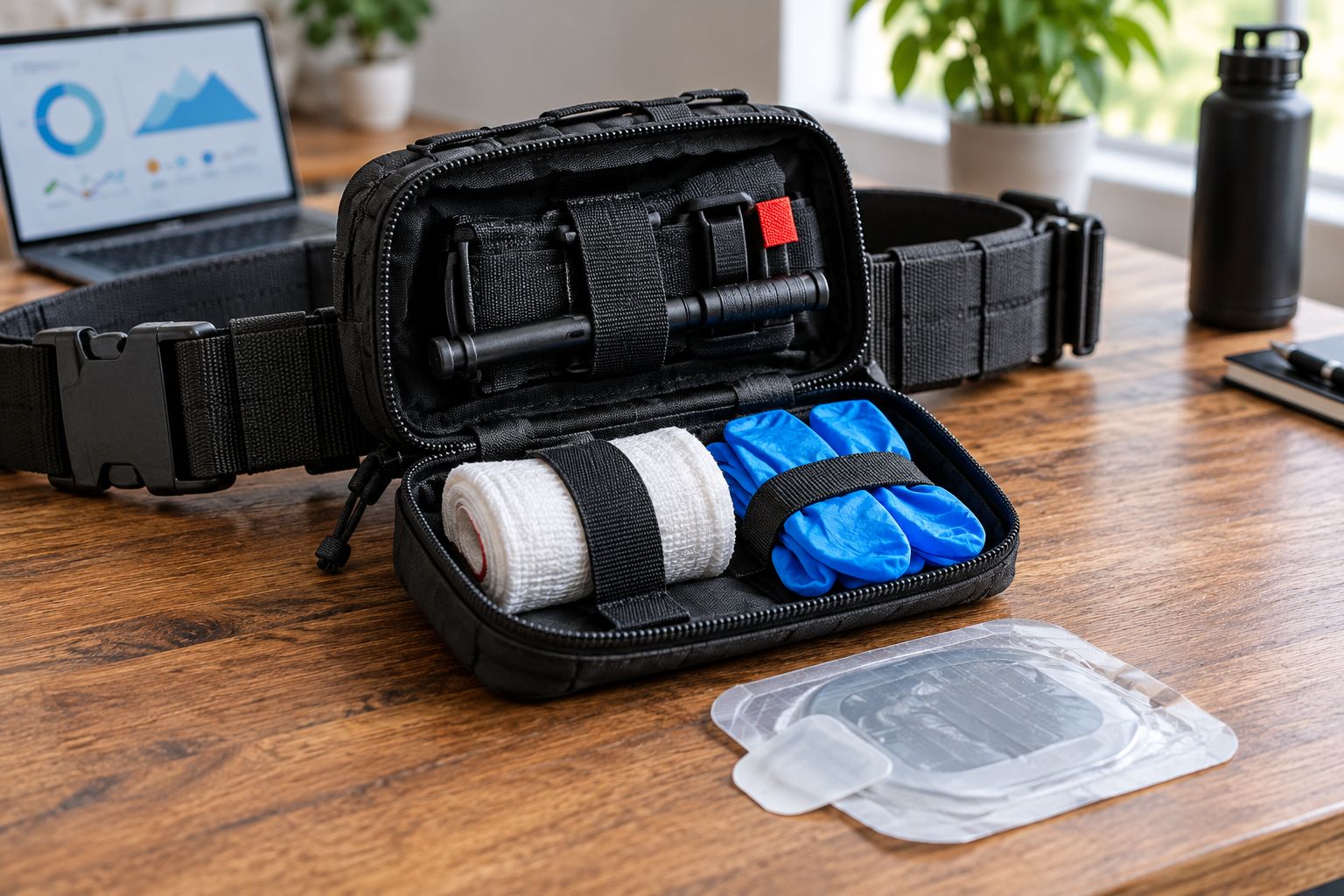
2. Blowout kit: best trauma kit for rapid gunshot or blast response
A blowout kit strips the IFAK down further: tourniquet, hemostatic gauze, and pressure dressing, nothing else. It's the minimalist option for a pocket, ankle rig, or backup carry.
Blowout kit pros:
- Smallest footprint of any trauma category
- Cheap to duplicate across multiple carry locations
- Fast one-hand deployment when practiced
Blowout kit cons:
- No airway or chest seal coverage
- Too limited for anything beyond a single extremity bleed
Best for: a backup kit in a second location. Verdict: Hold as a supplement, not your only trauma kit.
3. MOLLE modular trauma kit: best trauma kit for tactical team loadouts
A MOLLE trauma kit uses modular pouches that attach to a plate carrier or pack, letting a team member scale supply up or down by mission. It's the format most tactical medical loadouts are built around.
MOLLE kit pros:
- Expands to carry more supply than a slim IFAK
- Reconfigurable pouch placement per mission
- Compatible across most plate carrier and pack systems
MOLLE kit cons:
- Adds weight and bulk over a duty-belt IFAK
- Overkill for everyday civilian carry
Best for: tactical teams building mission-specific loadouts. Verdict: Buy if your unit already runs MOLLE gear.
4. Vehicle/glove box kit: best trauma kit for civilian everyday carry
This category prioritizes size over completeness. It's built to live in a car console, backpack, or nightstand and cover the highest-probability injuries a civilian actually encounters — car accidents, kitchen or workshop cuts, falls.
Vehicle kit pros:
- Small enough to store without thinking about it
- Covers common civilian injury scenarios
- No tactical training assumed to use it
Vehicle kit cons:
- Fewer components than a duty-grade IFAK
- Not built for gunshot or blast trauma volume
Best for: drivers, parents, and general preparedness. Verdict: Buy as a baseline for any vehicle or home.
5. Mass casualty (MCI) kit: best trauma kit for schools, venues, and workplaces
An MCI kit flips the math: instead of one full kit per person, it stocks multiple tourniquets and dressings so several bystanders can act on several casualties at once. This is the Stop the Bleed model built into a wall-mounted cabinet or bag.
MCI kit pros:
- Covers multiple casualties from one placement
- Designed for untrained bystander use
- Fits public-access placement like an AED cabinet
MCI kit cons:
- Not portable for a single carrier
- Requires periodic inventory checks in a public setting
Best for: schools, stadiums, offices, and public venues. Verdict: Buy for any space with regular foot traffic.
6. K9 trauma kit: best trauma kit for tactical K9 handlers
Built around canine anatomy, this category adapts tourniquet placement, wound packing, and bandaging for a working dog instead of a person. It's a narrow but essential category for handlers deploying K9 teams in the field.
K9 kit pros:
- Components sized and shaped for canine limbs and torso
- Keeps a working K9 team self-sufficient in the field
K9 kit cons:
- Useless for human casualties
- A niche purchase outside K9 handling roles
Best for: K9 handlers in tactical or search-and-rescue roles. Verdict: Buy only if you handle a working dog.
7. TACEVAC/medic bag: best trauma kit for combat medics and tactical EMS
This is the largest category: a full trauma and evacuation supply bag built for a designated medic, not an individual carrier. It covers airway, breathing, circulation, and packaging a casualty for movement.
Medic bag pros:
- Most complete supply set of any category
- Built for sustained casualty care, not just point-of-injury
Medic bag cons:
- Heaviest and most involved category to stock and maintain
- Requires medic-level training to use fully
Best for: designated combat medics and tactical EMS providers. Verdict: Buy if you're the team's medical lead, Skip if you're not trained to the level the bag assumes.
How this list was ranked
Each category was scored against the six criteria above: hemorrhage control priority, airway/chest seal coverage, carry method fit, casualty-load match, TCCC/Stop the Bleed alignment, and required training level. No category wins across every criterion, which is the point — the ranking is a decision tree by role, not a single leaderboard.
Which trauma kit should you choose?
If you carry for yourself on a belt or vest, the IFAK is the default answer. If you're stocking a car, backpack, or home, the vehicle/glove box category covers the injuries you're statistically most likely to see. If you're responsible for a building, school, or venue, the mass casualty kit is the only category built for more than one patient at a time. North American Rescue's lineup spans all of these categories, so match the kit to the role first and the brand second.
FAQ
What's the best trauma kit for law enforcement duty carry?
An IFAK built to mount on a duty belt or vest is the standard answer for law enforcement. It carries enough supply for one casualty and stays compact enough to not interfere with other gear.
Is a blowout kit the same as a full trauma kit?
No, a blowout kit is a stripped-down subset covering only a tourniquet, hemostatic gauze, and pressure dressing. A full IFAK or medic bag adds airway and chest seal coverage a blowout kit skips.
How much does a trauma kit cost in 2026?
Cost varies widely by component count, pouch quality, and carry format, so check current pricing directly on the product page rather than relying on a fixed figure. A blowout kit costs far less than a full TACEVAC medic bag simply because it carries far less.
What's the difference between an IFAK and a mass casualty kit?
An IFAK is built for one carrier and one patient, while a mass casualty kit stocks multiple tourniquets and dressings so several bystanders can treat several casualties at once. They solve different scale problems, not the same problem at different sizes.
Do civilians need a trauma kit in their car?
A compact vehicle trauma kit covers the injuries civilians most commonly encounter, including car accidents and workshop or kitchen injuries. It doesn't need tactical-level supply, just a tourniquet, dressing, and gloves within reach.
What should be in every trauma kit regardless of type?
A tourniquet and hemostatic gauze form the non-negotiable base of any trauma kit, since uncontrolled hemorrhage is the most time-sensitive threat to life. Gloves and a pressure dressing round out the minimum viable kit.
Is a tourniquet legal to carry as a civilian?
Tourniquets are legal to purchase and carry for civilians in the United States, and Stop the Bleed programs actively encourage public ownership. Check local regulations if carrying in a workplace or venue with its own policy.
How often should trauma kit components be checked or replaced?
Check trauma kit components at least annually for expired hemostatic gauze, damaged tourniquet straps, or degraded adhesive on chest seals. Kits stored in a hot vehicle glove box need more frequent checks than one stored indoors.
One last thing
The component people skimp on most isn't the tourniquet, it's the hemostatic gauze — it expires and it's the part nobody rechecks until the kit is already open in an emergency. Set a calendar reminder tied to the expiration date printed on the packaging, not a vague "once a year" habit.
Build your trauma kit around the role you actually carry for, then verify the pick against North American Rescue before you commit to a specific setup.