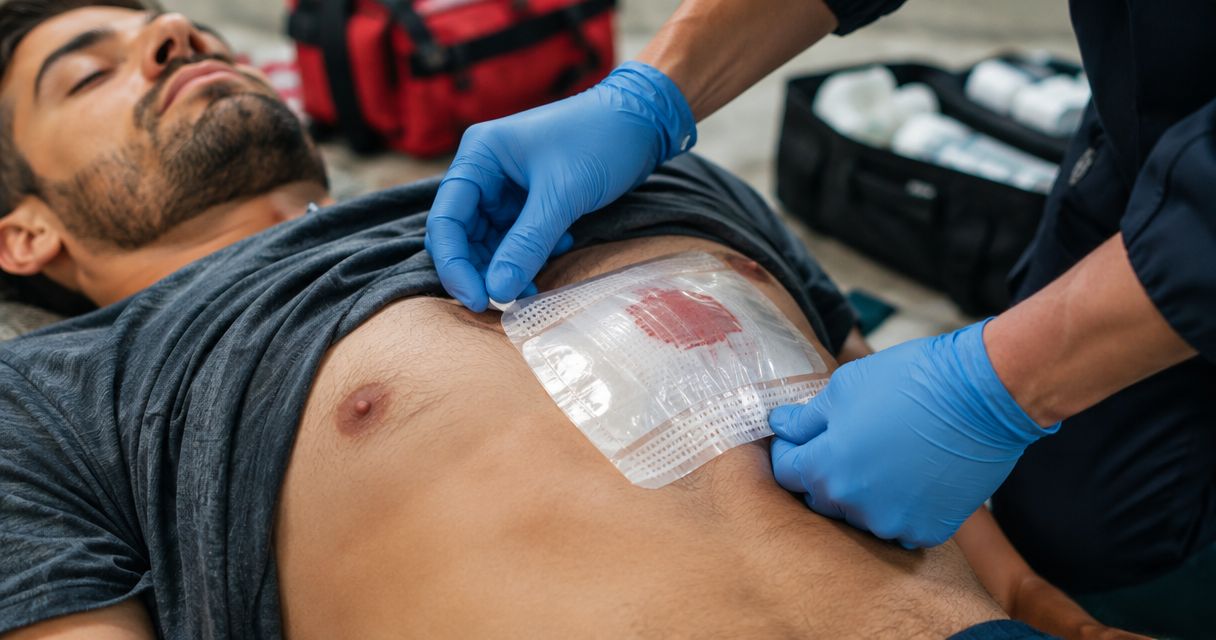
A gunshot wound to the torso is a trauma emergency where the right chest seal — chosen and applied correctly — is part of managing an open chest wound before advanced care arrives. The HyFin Vent Chest Seal Twin Pack is the best chest seal for gunshot wounds in 2026 because it ships two vented seals per pack, matched to the entry-and-exit reality of most GSWs. The HALO Chest Seal wins for cold, wet, or bloody field conditions, and the Bolin Chest Seal is the best budget-friendly vented pick for organizations building out multiple IFAKs at once.
- HyFin Vent Chest Seal Twin Pack is the best chest seal for gunshot wounds with entry and exit sites.
- HALO Chest Seal holds adhesion in cold, wet, or bloody conditions better than standard vented seals.
- Bolin Chest Seal delivers vented occlusive coverage at lower unit cost for bulk IFAK builds in 2026.
- SAM Chest Seal uses a manually adjustable vent valve, best for medics already trained on it.
- Non-vented chest seals belong in training kits in 2026, not live trauma kits.
Why this matters
North American Rescue and other established medical suppliers sell chest seals built to a vented occlusive-dressing standard — a category distinct from the low-cost imitation dressings that turn up in bargain kits. A penetrating chest wound risks developing into an open pneumothorax, one of the checkpoints covered under the Respiration step of the M.A.R.C.H. framework taught in tactical and EMS trauma courses.
A chest seal only manages the visible wound opening. It does not replace training, and it does not eliminate the risk of a tension pneumothorax developing after placement — that reassessment is a trained-provider task, not something a seal handles on its own. Choosing between vented and non-vented, single and twin-pack, standard and cold-weather adhesive is a selection decision, not a clinical one, and it's the decision this guide covers.
What makes the best chest seal in 2026
- Vented vs. non-vented design — a one-way valve that lets trapped air escape separates a modern chest seal from a legacy occlusive dressing.
- Adhesive performance — how the seal bonds to skin that's wet, bloody, cold, or covered in body hair.
- Pack configuration — single seal vs. twin pack, which matters directly for gunshot wounds with an exit site.
- Footprint and coverage — the seal has to cover the wound with enough adhesive margin to hold under movement.
- Audience fit — a seal chosen for a trained EMS medic isn't automatically the right pick for a civilian preparedness kit.
- Shelf life and storage — chest seals carry an expiration date printed on the packaging; check it before it goes in a kit that sits for years.
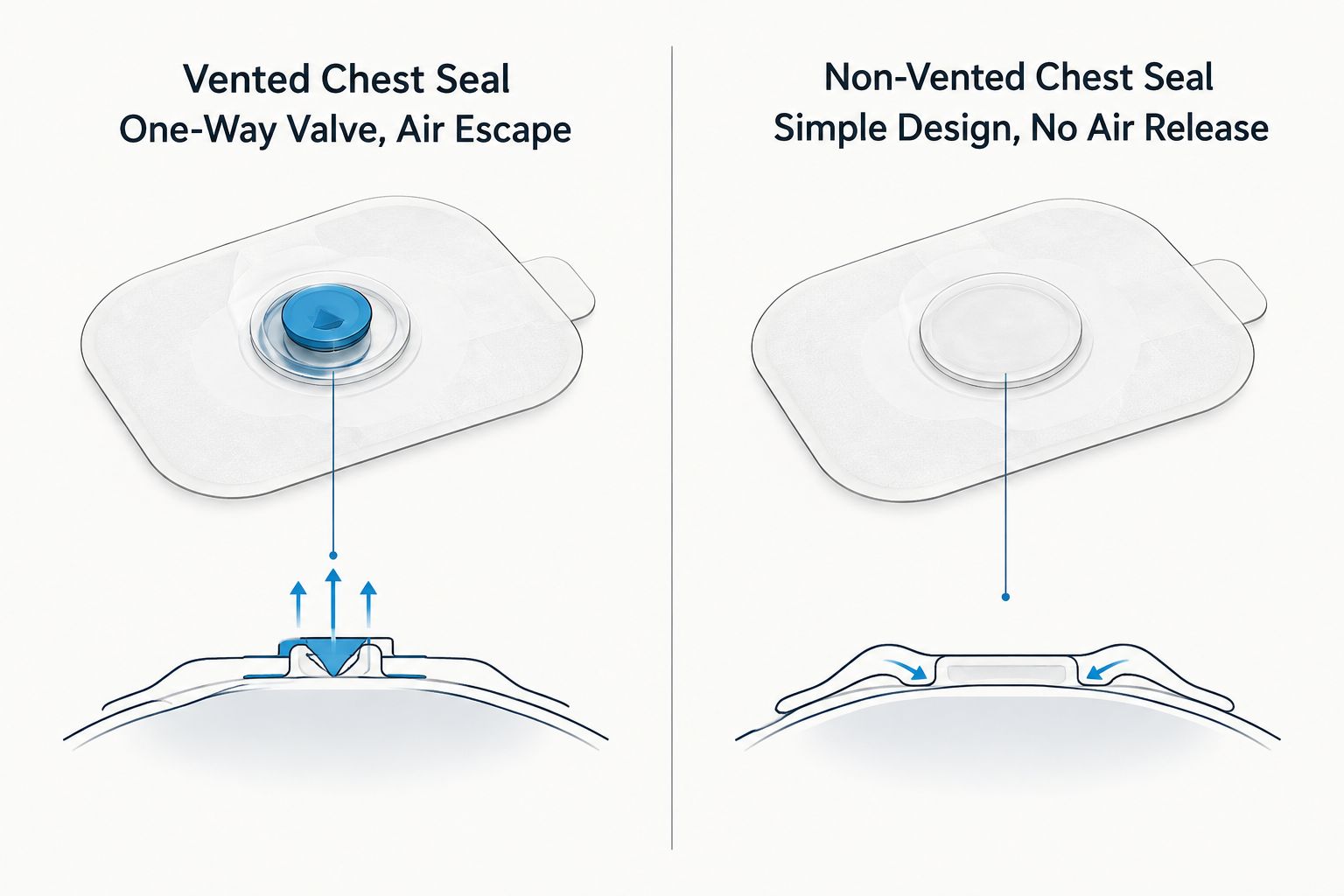
Chest seals at a glance
| Chest Seal | Best For | Standout Feature | Key Limitation |
|---|---|---|---|
| HyFin Vent Chest Seal Twin Pack | Gunshot wounds with entry and exit sites | Two vented seals per pack for through-and-through trauma | Twin-pack bulk takes more room in a compact IFAK |
| HALO Chest Seal | Cold, wet, or bloody field conditions | Adhesive rated to hold in adverse conditions | Larger footprint uses more kit space |
| Bolin Chest Seal | Bulk IFAK builds across many kits | Vented occlusive design at lower unit cost | Fewer redundancy features than twin-pack options |
| SAM Chest Seal | Medics trained on adjustable-valve seals | Manually adjustable vent valve | Extra moving part to check before deployment |
| Non-vented chest seal | Training and simulation reps | Simple design, no valve to fail in practice | Does not vent trapped air — not for live kits |
1. HyFin Vent Chest Seal Twin Pack: best chest seal for gunshot wounds with entry and exit sites
North American Rescue manufactures the HyFin Vent Chest Seal as a vented occlusive dressing designed to cover a penetrating chest wound and vent trapped air associated with an open pneumothorax. The twin-pack format ships two seals per package — a direct match for a gunshot wound where the round enters and exits the torso, leaving two separate openings that each need coverage.
HyFin Vent Chest Seal pros:
- Two seals per pack cover both entry and exit wounds from one gunshot injury
- Vented valve lets trapped air escape rather than building pressure under the seal
- Adhesive perimeter built for high-mobility field use
HyFin Vent Chest Seal cons:
- Twin-pack bulk is unnecessary weight when only one wound site needs coverage
- Valve position needs a visual check that's harder to do under load-bearing gear
Best for: military, law enforcement, and EMS responders carrying a chest seal specifically for penetrating gunshot trauma to the torso. Verdict: Buy.
2. HALO Chest Seal: best chest seal for cold-weather and wet-condition deployment
The HALO Chest Seal is a vented occlusive dressing built around an adhesive designed to bond in wet, bloody, or cold conditions where standard adhesives lose grip. It's a common pick in maritime and cold-weather medical kits for exactly that reason.
HALO Chest Seal pros:
- Adhesive formulated to hold in wet, bloody, or cold field conditions
- Vented design manages trapped air the same way as other modern seals
- Widely stocked across military, EMS, and preparedness supply channels
HALO Chest Seal cons:
- Larger footprint takes more space in a compact kit than smaller seals
- No twin-pack option — two units means buying two separately
Best for: cold-weather operations, maritime units, and any responder working wet or bloody conditions. Verdict: Buy.
3. Bolin Chest Seal: best chest seal for bulk IFAK builds
The Bolin Chest Seal is a vented occlusive dressing built at a lower unit cost, which matters when an organization is outfitting dozens or hundreds of individual first aid kits — schools, fleet vehicles, or community bleeding-control programs stocking multiple stations at once.
Bolin Chest Seal pros:
- Vented design at a lower per-unit cost than premium seals
- Compact packaging fits standard IFAK pouches without modification
- Straightforward single-valve design with no extra parts
Bolin Chest Seal cons:
- Fewer redundancy features than twin-pack seals for exit-wound scenarios
- Less field-tested cold-weather adhesion history than HALO
Best for: organizations stocking bleeding-control kits across many vehicles or stations in 2026. Verdict: Buy.
4. SAM Chest Seal: best chest seal for adjustable vent control
The SAM Chest Seal is a vented occlusive dressing with a valve a trained user can manually adjust, giving control over airflow that fixed-vent seals don't offer.
SAM Chest Seal pros:
- Manually adjustable vent valve gives control over airflow
- Meets the same vented occlusive category as other modern seals
- Recognized across many EMS training curricula
SAM Chest Seal cons:
- An extra moving part means one more thing to check before deployment
- The adjustable valve adds a decision point untrained users don't need
Best for: trained EMS and tactical medics who already train on adjustable-valve chest seals. Verdict: Hold — pick this if your training program already covers the adjustable valve; a fixed-vent seal is simpler to trust under stress otherwise.
5. Non-vented chest seal: best chest seal for training and simulation use
A non-vented chest seal is a simple occlusive dressing without a one-way valve — the older-generation design that vented seals were built to replace. It still has a place in training programs and simulation kits focused on teaching correct wound coverage, not on managing trapped air.
Non-vented chest seal pros:
- Lower cost makes repeated training reps reasonable
- Simple design with no valve to malfunction during practice
- Useful for teaching correct wound-coverage placement
Non-vented chest seal cons:
- Does not vent trapped air — a real gap in an actual open pneumothorax
- Not a substitute for a vented seal in a live-carry trauma kit
Best for: training programs and simulation drills, not live trauma kits. Verdict: Skip for a real kit; fine for training reps only.
Build a complete trauma kit
Pair a genuine chest seal with the rest of a bleeding-control loadout.
How we ranked these chest seals
Each chest seal on this list is ranked against the same six criteria: vented vs. non-vented design, adhesive performance under adverse conditions, pack configuration for exit-wound scenarios, footprint relative to kit space, audience fit, and shelf-life labeling. No two items compete for the same use case — a responder building a GSW-specific kit, a cold-weather unit, a bulk buyer, a trained medic wanting valve control, and a training program each land on a different pick.
Which chest seal should you choose in 2026?
For a torso gunshot wound kit, the HyFin Vent Chest Seal Twin Pack from North American Rescue is the default pick in 2026 — the twin-pack format matches the entry-and-exit reality of most GSWs. Working in cold, wet, or bloody conditions moves the pick to the HALO Chest Seal. Outfitting many kits at once favors the Bolin Chest Seal on cost. Skip a non-vented seal for anything but training reps — it does not vent trapped air, and that's the entire point of carrying a modern chest seal.
FAQ
What's the best chest seal for gunshot wounds in 2026?
The HyFin Vent Chest Seal Twin Pack is the best chest seal for gunshot wounds in 2026 because it ships two vented seals per pack, matching the entry-and-exit-wound pattern common to torso GSWs.
Is a vented chest seal better than a non-vented chest seal?
Yes, for a live trauma kit. A vented chest seal has a one-way valve that lets trapped air escape, while a non-vented seal has no such release and belongs in training kits instead.
Can civilians buy a chest seal?
Yes, chest seals are sold openly through military and civilian medical suppliers. Using one correctly still requires training in recognizing an open chest wound, which is why this guide sticks to product selection rather than treatment steps.
Do I need training to use a chest seal?
Training in recognizing a penetrating chest wound and correct seal placement is strongly recommended before adding one to a kit. A chest seal is advanced trauma equipment, not a general first-aid item.
What's the difference between the HyFin Vent Chest Seal and the HALO Chest Seal?
Both are vented occlusive dressings, but the HyFin Vent ships as a twin pack for entry-and-exit wounds while the HALO Chest Seal is built around an adhesive rated for wet, bloody, or cold conditions.
Should a civilian preparedness kit include a chest seal?
Only if the person carrying the kit has training to recognize and respond to a penetrating chest wound. A chest seal without the training to use it correctly is not a substitute for that knowledge.
How many chest seals should go in one kit?
At minimum, enough to cover both an entry and an exit wound from a single gunshot, which is why twin-pack seals exist. A kit built around a single seal only covers one wound opening.
One last thing
A single chest seal only covers one wound opening. If a gunshot has an exit wound, one seal isn't enough — that's the entire reason North American Rescue packages the HyFin Vent as a twin pack instead of a single unit, and it's the detail most buyers miss when they grab the cheaper single-pack option in 2026.