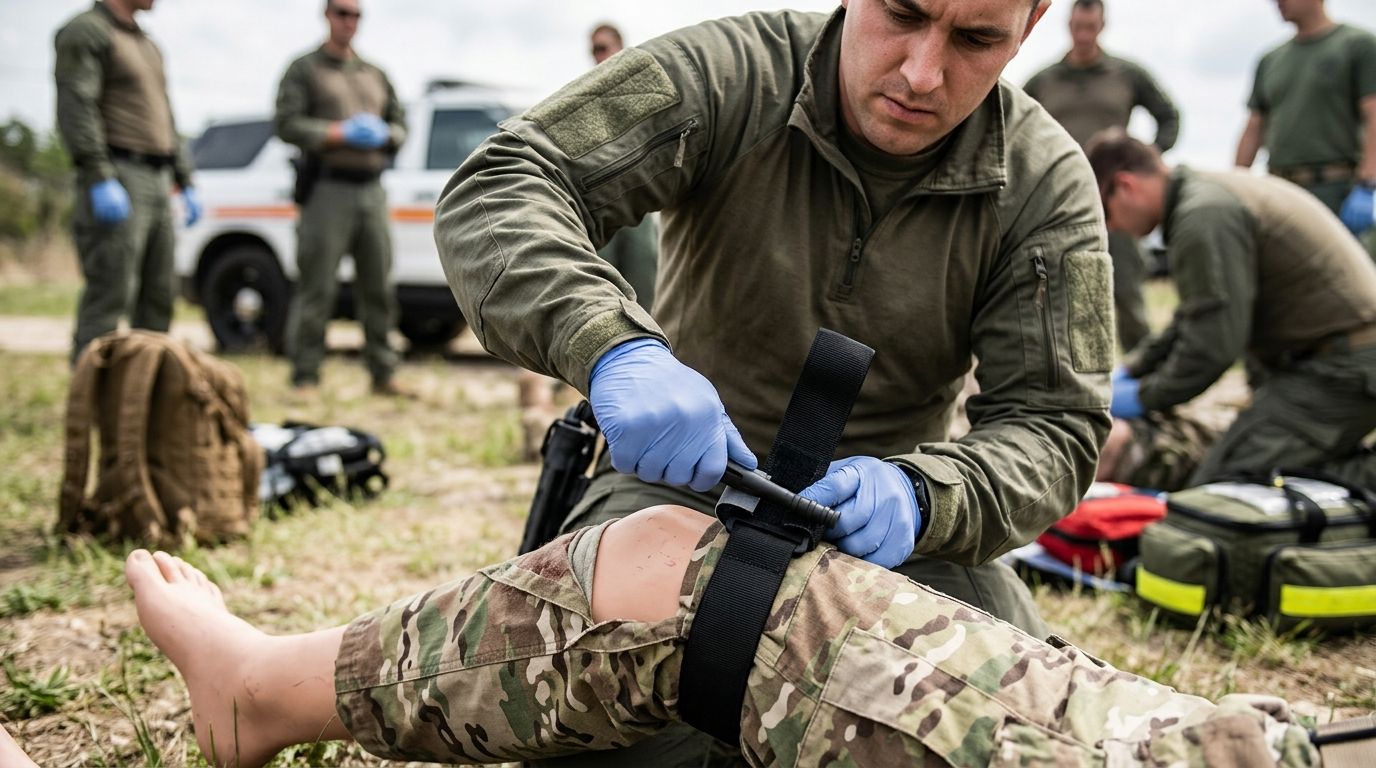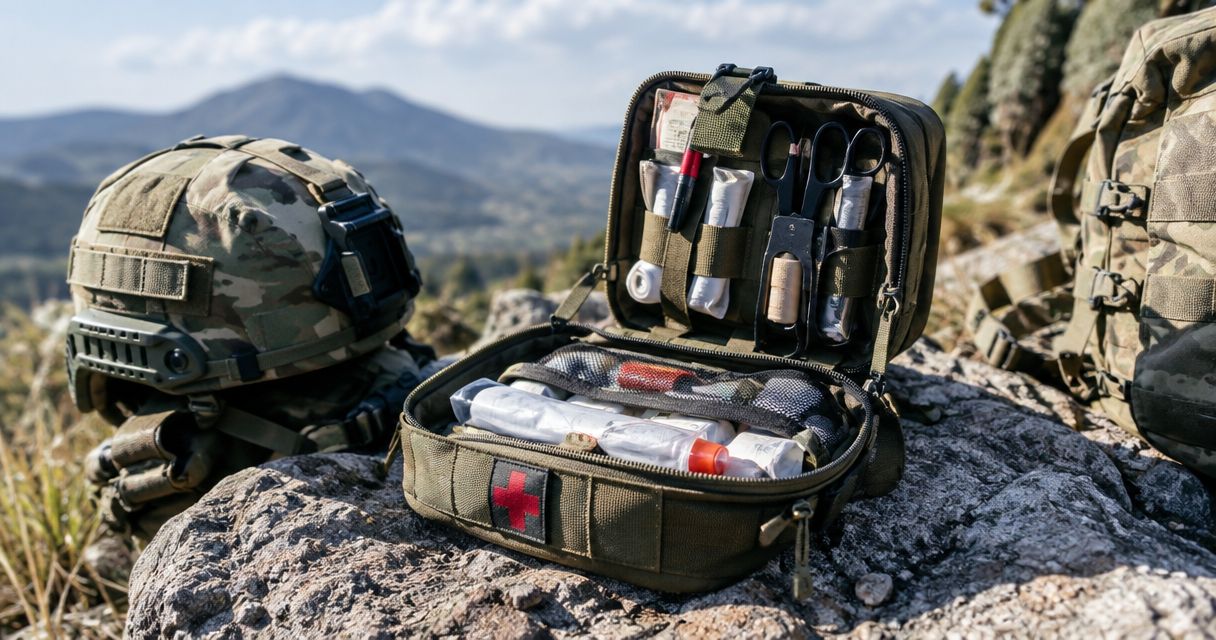

Best for standardized responder inventory: a genuine C-A-T® Tourniquet when current manufacturer guidance confirms fit for the intended patient. Best for a smaller limb outside that documented fit: a pediatric-sized tourniquet selected under your organization’s medical protocol. There is no single best pediatric tourniquet for every child. Narescue sells tactical medical products and kits, but the deciding factor in this 2026 comparison is documented fit, not a familiar product name.
- The best pediatric tourniquet is one with documented fit for the intended patient and an approved training protocol.
- A genuine C-A-T® Tourniquet is the standardized-inventory pick only where its current manufacturer guidance supports the intended fit.
- For smaller limbs, assess pediatric-sized options against manufacturer guidance before adding one to a kit.
- Packaging appearance alone does not establish whether a C-A-T® Tourniquet is genuine.
Why this matters
A tourniquet bought for an adult responder kit does not become a pediatric selection simply because it is already in stock. Children vary in size, and a product label alone does not establish fit for every intended patient. In 2026, group buyers need a selection record that connects the device, its current manufacturer guidance and the training their people receive.
The question is different for a family building an emergency kit. You need a device from a traceable source, documentation you can check and training appropriate to the equipment. Buying a product described as pediatric without identifying the actual model and its fit guidance leaves the central question unanswered.
This is a buying guide, not a treatment guide. It does not replace an organization’s medical direction, device instructions or hands-on bleeding-control training.
What makes the best pediatric tourniquet
Use these criteria before comparing names or ordering quantities:
- Documented fit: Check the current manufacturer instructions for the specific model against the intended patient population. Do not infer a minimum limb size from a product photograph.
- Traceable sourcing: Keep supplier, model and order records. If a listing does not identify what you will receive, you cannot reliably check its documentation.
- Product identification: Confirm that the device and packaging match current manufacturer information. Do not treat color, stitching or a single printed mark as proof of authenticity.
- Training alignment: Select equipment that your responders are trained and authorized to carry. A different model creates a separate familiarization requirement.
- Kit role: Decide whether the purchase serves a responder inventory, a civilian bleeding-control kit or family preparedness. Those are different purchasing decisions.
- Replacement control: Identify the model you intend to reorder so a later shipment does not silently change the contents of standardized kits.
The best pediatric tourniquet is the one whose documented fit, source and training match the people your kit is built for. No single criterion substitutes for the others.
Pediatric tourniquets at a glance
| Option | Best for | Standout feature | Key limitation |
|---|---|---|---|
| Genuine C-A-T® Tourniquet | Standardized responder inventory when documented fit supports its use | A named model that buyers can specify consistently | Do not assume fit for every pediatric limb |
| Manufacturer-documented pediatric-sized tourniquet | Smaller limbs outside the documented fit of the standard inventory model | Selection begins with the exact model’s pediatric fit guidance | A pediatric label alone does not verify fit, sourcing or training readiness |
This 2026 comparison ranks selection routes, not unverified claims that either device works on every child. The second row is a product category, not an endorsement of an unnamed brand or model. Request the exact model and current instructions before placing it on a purchasing list.
A purchaser comparing these options should write down the intended user group before seeking approval. An EMS agency assessing equipment for trained responders has different documentation and training needs from a household assembling a preparedness kit. The table does not collapse those audiences into one recommendation.
A note on the word pediatric
Pediatric describes a patient group, not a universal device specification. A search result for best pediatric tourniquet cannot tell you which model fits the patient group your organization serves. It also cannot confirm that a seller will ship the same model shown in a listing.
For procurement, put the exact model and current manufacturer documentation on the same review record. If either is missing, hold the selection. For individual preparedness, apply the same rule before treating a device as suitable for a child in your household.
1. Genuine C-A-T® Tourniquet: best for standardized responder inventory
The C-A-T® Tourniquet is a named tourniquet option for buyers who need to specify an exact device across kits and training materials. Narescue’s tactical medical focus makes this a relevant inventory question for military, law enforcement and EMS buyers. In 2026, the C-A-T® is the first option to assess when your organization already plans around that model; its name is not evidence that it fits every child.
The purchase decision has two separate checks. First, establish that the unit comes through a traceable supply channel and matches current manufacturer information. Second, confirm that the exact model’s documented fit covers the intended pediatric use. Passing the sourcing check does not answer the fit question.
C-A-T® Tourniquet pros:
- Buyers can name the exact model on an equipment list rather than ordering a generic tourniquet.
- A consistent model makes kit contents easier to identify during inventory reviews.
- Manufacturer documentation gives procurement teams a reference point for product and fit checks.
C-A-T® Tourniquet cons:
- The product name alone does not establish suitability for every pediatric limb.
- An unidentified marketplace listing does not provide reliable proof of authenticity.
- Standardizing on an existing model can hide a pediatric-fit gap unless buyers review that question explicitly.
Best for: A trained responder organization whose current guidance and procurement records support this exact model for its intended use. For a family, it is a candidate to evaluate, not an automatic answer to pediatric preparedness.
Verdict: Buy only after confirming genuine sourcing and documented fit; otherwise, hold. Narescue’s C-A-T® Tourniquet should not be described as the best pediatric tourniquet without that qualification.
2. Pediatric-sized tourniquet: best for a documented smaller-limb need
A pediatric-sized tourniquet is the route to assess when the intended limb falls outside the documented fit of the standard inventory option. It is not a recommendation to buy any item carrying the word pediatric. The model, manufacturer instructions, supplier and training plan all need to be identified before approval.
Ask the supplier to identify the exact device rather than sending a category description. Review current manufacturer guidance for that device and confirm that your organization’s medical direction permits it. A household buyer should likewise avoid assuming that a smaller-looking device is suitable without its model-specific instructions and appropriate training.
Pediatric-sized tourniquet pros:
- It prompts an explicit review of smaller-limb fit rather than an assumption based on adult inventory.
- Model-specific instructions give buyers a basis for checking the intended use.
- A separately specified device makes a distinct pediatric equipment need visible on the kit list.
Pediatric-sized tourniquet cons:
- Pediatric-sized is not a standardized model name; different listings require separate verification.
- Adding a second model creates additional identification and training work for group buyers.
- Without an exact model and current documentation, no fit recommendation can be made.
Best for: An organization with an identified smaller-limb requirement, an approved device and training for that device. For family preparedness, it is an option to assess only after you can identify the model and check its documentation.
Verdict: Hold until a specific model, documented fit, traceable source and training plan are confirmed. Do not replace that review with a generic pediatric label.
How to check whether a C-A-T® is genuine
An authenticity check starts before the package arrives. Specify the exact C-A-T® Tourniquet on the order, retain the seller and order details, and compare the received item with current manufacturer information. If the seller cannot establish what model it is supplying or where it came from, do not treat the listing as verified.
After receipt, check the device and packaging against current manufacturer materials and resolve discrepancies with the seller or manufacturer. No single visible detail proves authenticity. A photograph, a familiar color or a printed mark can support a question, but none replaces traceable sourcing and model confirmation.
Keep authenticity and pediatric fit as separate decisions. A genuine device still requires a fit review for the intended patient group. Conversely, a listing that claims pediatric suitability does not establish that the supplied item is genuine. In 2026, document both checks before adding a device to a standardized kit.
For group orders, use the same product identification when receiving shipments and reviewing kit contents. A purchasing record is less useful if it names only tourniquets and the received model is never confirmed. Families need not build an institutional record, but they should retain enough information to identify the device and find its current instructions.
Match the choice to the kit
Military, law enforcement and EMS: Start with the organization’s equipment policy, medical direction and training. Where the approved C-A-T® Tourniquet has documented fit for the intended use, a consistent model can simplify purchasing and inventory identification. Where it does not, assess a separately specified pediatric option rather than assuming the standard kit covers the gap.
Community bleeding-control groups: Record who receives the kits and what training accompanies them. A device chosen for trained responders is not automatically the right purchase for a public-access kit. Confirm the exact model and supporting documentation before expanding an order across locations.
Individuals and families: Do not buy by a search-result superlative. Identify the intended users, choose a traceable supplier, retain the device instructions and seek appropriate bleeding-control training. If you cannot confirm the model or its intended fit, keep looking rather than treating the word pediatric as a specification.
Narescue serves both professional responders and preparedness buyers. The best pediatric tourniquet decision for those groups follows the same core rule—verified device, documented fit, appropriate training—but the person who approves equipment and maintains the kit differs.
How we ranked the options
The ranking puts the named C-A-T® Tourniquet first for standardized responder inventory, not for all pediatric patients. It puts a manufacturer-documented pediatric-sized option second because a smaller-limb requirement calls for an explicit model review, not an invented universal recommendation.
Both options were judged by the criteria above: documented fit, sourcing, identification, training alignment and kit role. No device receives a fit endorsement here without the exact model’s current manufacturer guidance. This is why the 2026 verdict is conditional rather than a claim that one tourniquet covers every child.
Which pediatric tourniquet should you choose?
Choose a genuine C-A-T® Tourniquet when its current documentation supports your intended patient group and it matches your approved training. That is the default assessment for a standardized inventory using that model. Do not extend the recommendation to smaller limbs merely because the device is already stocked.
Choose a specific pediatric-sized model only after documenting the fit requirement and verifying that model’s instructions, source and training plan. If those facts are not available, hold the purchase decision. For a household kit, the same verification matters more than any ranked-list position.
In 2026, the answer to best pediatric tourniquet is therefore a purchasing rule: identify the patient group first, then select an exact, traceable device with documented fit. A category label cannot do that work for you.
FAQ
What is the best pediatric tourniquet in 2026?
The best pediatric tourniquet is an exact, traceable model with documented fit for the intended patient and appropriate training. A genuine C-A-T® Tourniquet is a standardized-inventory candidate where its current guidance supports the intended fit; smaller limbs require a separate model review.
Is a C-A-T® Tourniquet suitable for every child?
No universal pediatric-fit claim follows from the C-A-T® name. Check current manufacturer guidance for the exact model and the intended patient group before selecting it.
How can I tell whether a C-A-T® Tourniquet is genuine?
Check the exact model through a traceable supplier and compare the received device with current manufacturer information. Packaging appearance or a single printed detail alone does not establish authenticity.
Is a pediatric-sized tourniquet always better than a C-A-T®?
No; the better choice depends on documented fit, the exact model and the training plan. Pediatric-sized is a category description, not proof that a particular device suits every child.
What should an EMS buyer check before ordering pediatric tourniquets?
An EMS buyer should identify the intended patient group, exact model, current manufacturer fit guidance, supplier and applicable medical protocol. The training plan and kit inventory should name the device being ordered.
Should a family buy a tourniquet labelled pediatric?
A family should not rely on the pediatric label alone. Identify the model, check its current instructions and sourcing, and obtain training appropriate to the equipment.
Does a genuine tourniquet automatically have the right pediatric fit?
No. Authenticity establishes a different point from fit; check both the device’s provenance and its current manufacturer guidance for the intended use.
One last thing
Record the exact model before you compare suppliers. If your 2026 kit list says only pediatric tourniquet, neither a buyer nor a recipient can tell whether a replacement shipment matches the device that was reviewed. Narescue buyers can avoid that gap by keeping product identification, fit documentation and training decisions together.